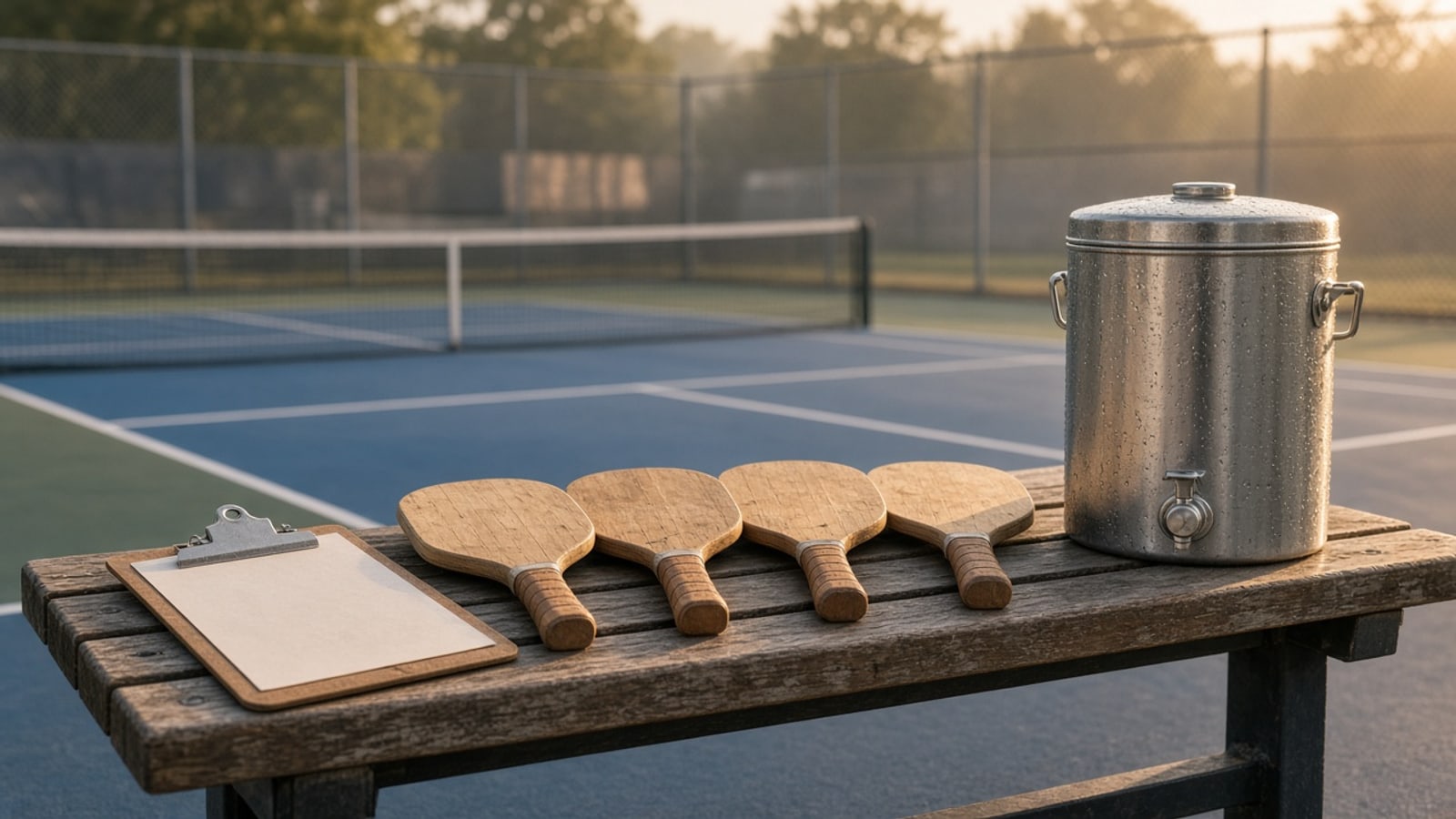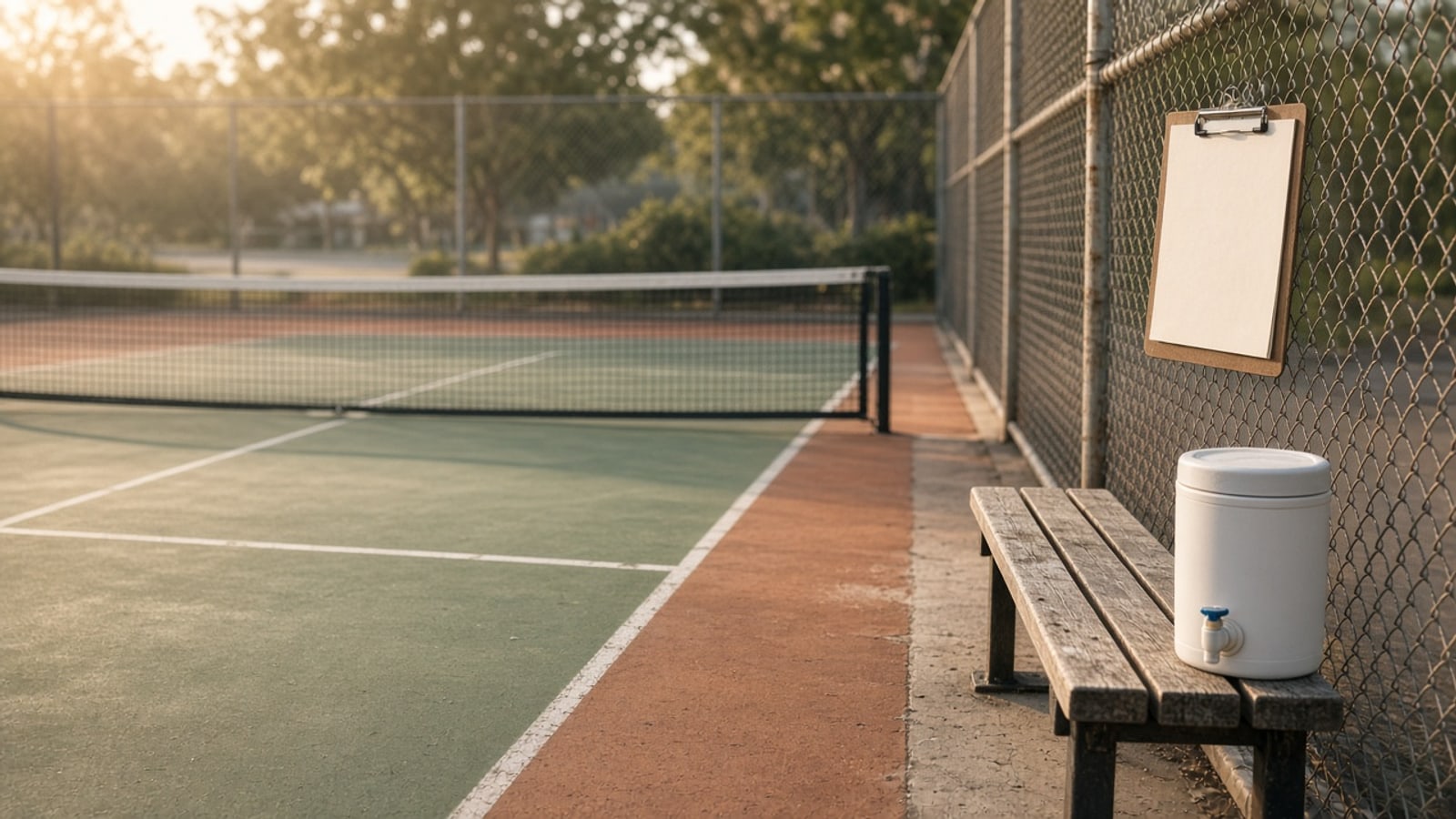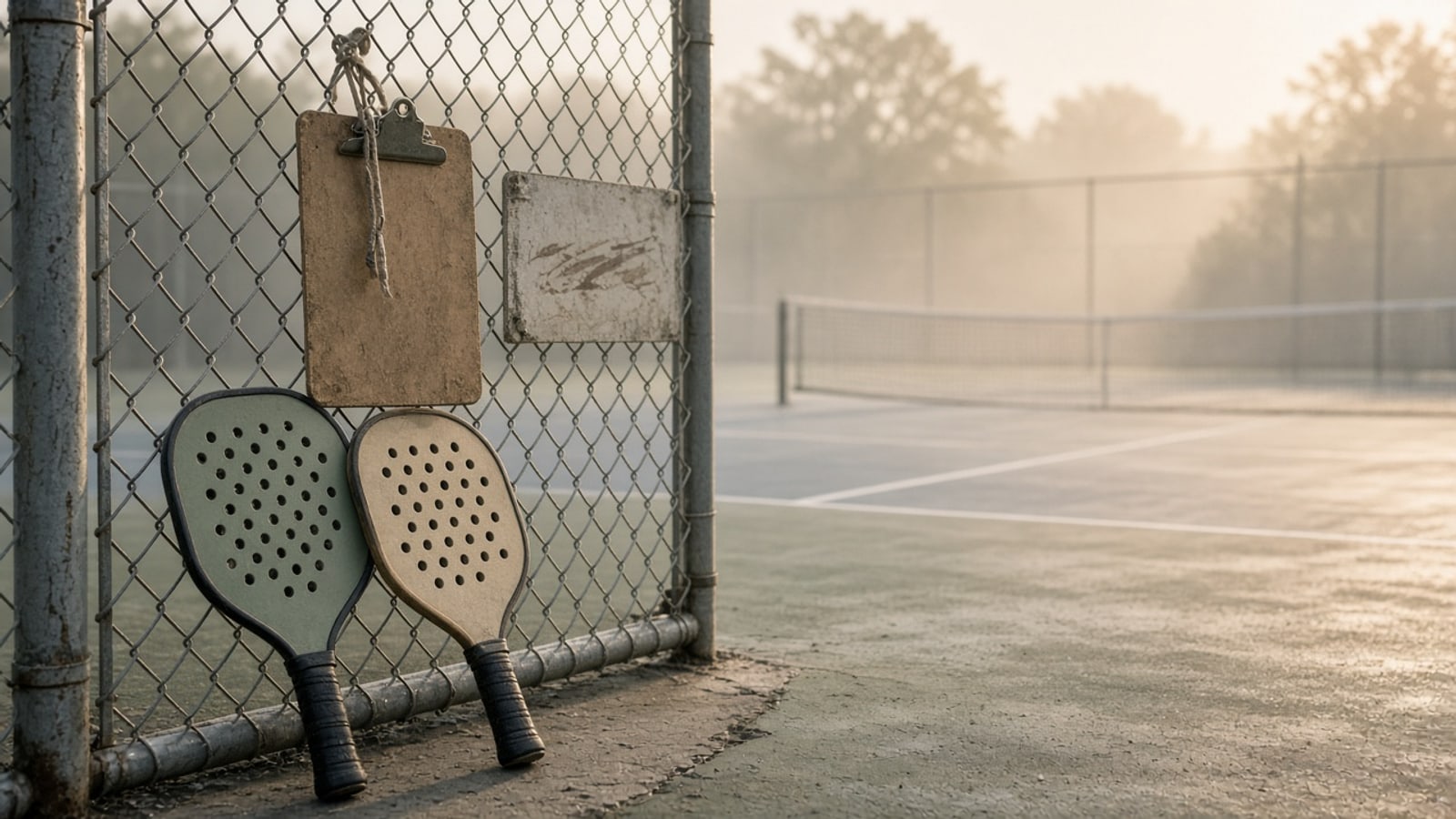
The new couple showed up at 7:25 on a Saturday with matching bags and the look of people who had read the rules but not the room. The first game starts at 7:30. The husband had the enthusiastic handshake of a man who had watched a lot of video. The wife had the expression of someone who had been promised breakfast afterward.
I paired them with Art and me for the first game. That is not charity. It is strategy. If their first forty minutes are kind, they come back, and a club that keeps its new players is a club that survives. If they spend the first forty minutes being quietly embarrassed, they do not come back, and I never see them again.
That is how a club shrinks. Not in a dramatic collapse. One couple at a time.
The first forty minutes decide everything
A new player is not evaluating the courts. They are evaluating whether they belong in the room. That evaluation happens in the first game, mostly in the first ten minutes, and it has almost nothing to do with their skill.
Three things do the work:
- Someone says hello by name and remembers it.
- Someone explains the rotation out loud, before the first game, in one sentence.
- Their first partner is patient and does not correct them at the net.
None of these cost anything. All three are decisions the group makes before the ball is served.
Pair with patient, not with strongest
The instinct at open play is to put the new player with the best player, as if the club is a school and the strongest player is the teacher. That is usually wrong.
The strongest player is often the least patient, because they have a game to play and a rhythm to protect. The patient regular will let a beginner miss six shots, will keep the ball alive, and will say something encouraging that does not sound like pity. That is the pairing that converts.
I keep a mental list of patient regulars. It is not a long list and it is the most valuable asset the club has after the courts themselves.
Couples: together for one, apart for two
The couple pairing rule is one of the few I will enforce without asking. Game one, together. Game two, apart.
Together first because familiar company lowers nerves and gives the beginner a safe place to laugh. Apart second because a spouse is the worst possible coach and the best possible source of partner pressure. Splitting them for one game does two things: it protects the beginner from the person most likely to correct them, and it tells the experienced spouse that this is a group activity, not a private lesson.
Nobody has ever complained about the rule after the fact. Several people have told me they were grateful for it.
The three club rules that actually matter
There is a laminated sheet of rules in the tote bag, but only three of them do any real work.
One: everyone gets a number. The sign-up sheet is a promise. If the rotation is unclear, the quietest player waits the longest. Saying "you're fourth, that's about twenty minutes" is worth more than any welcome speech.
Two: call your own lines honestly and accept the other side's call. This is the only rule that, when broken, makes a friendly game feel bad. It gets one calm conversation, not a public argument.
Three: the group is not a ladder. Nobody is ranking anybody here. A 3.5 player and a 2.5 player can have a good game if the pairings are fair. The moment open play becomes a status system, half the club stops showing up.
When someone is rude
It happens. Someone says something sharp about a partner's miss, or rolls their eyes at a beginner, or refuses to rotate. The temptation is to correct them in front of everyone, because you are right and the group saw it.
Do not do that. It turns a small social problem into a public trial about who is right. Instead, take them aside, not during the game, and ask about it plainly. "Hey, when you said that to her, it landed hard. Can you keep it lighter with the newer players?" Most people are embarrassed and correct themselves. The ones who do not correct themselves are telling you something useful about whether they belong in a volunteer club.
Then, in public, model the norm. Pair them with someone patient. Say the good thing out loud when someone else does it. Norms are caught more than they are taught.
The invitation
After the second game, I asked the wife if she was coming back Saturday. She said she wasn't sure, that she did not want to hold people back. I told her she wasn't holding anyone back, that the first month is a rotation thing, and that Art had been playing for four years and still could not hit a backhand drop.
She laughed. She came back. Her husband now brings the coffee on Saturdays, which is a takeover I did not anticipate and fully support.
That is the whole job. Not elite courts, not the best paddles. One new player at a time, made comfortable enough to return. For the technical version of the rotation problem, my friend Ray wrote about the sign-up sheet. And if the new player's knees are the thing they are worried about, Tomás has the warm-up in the warm-up I do at fifty-eight.