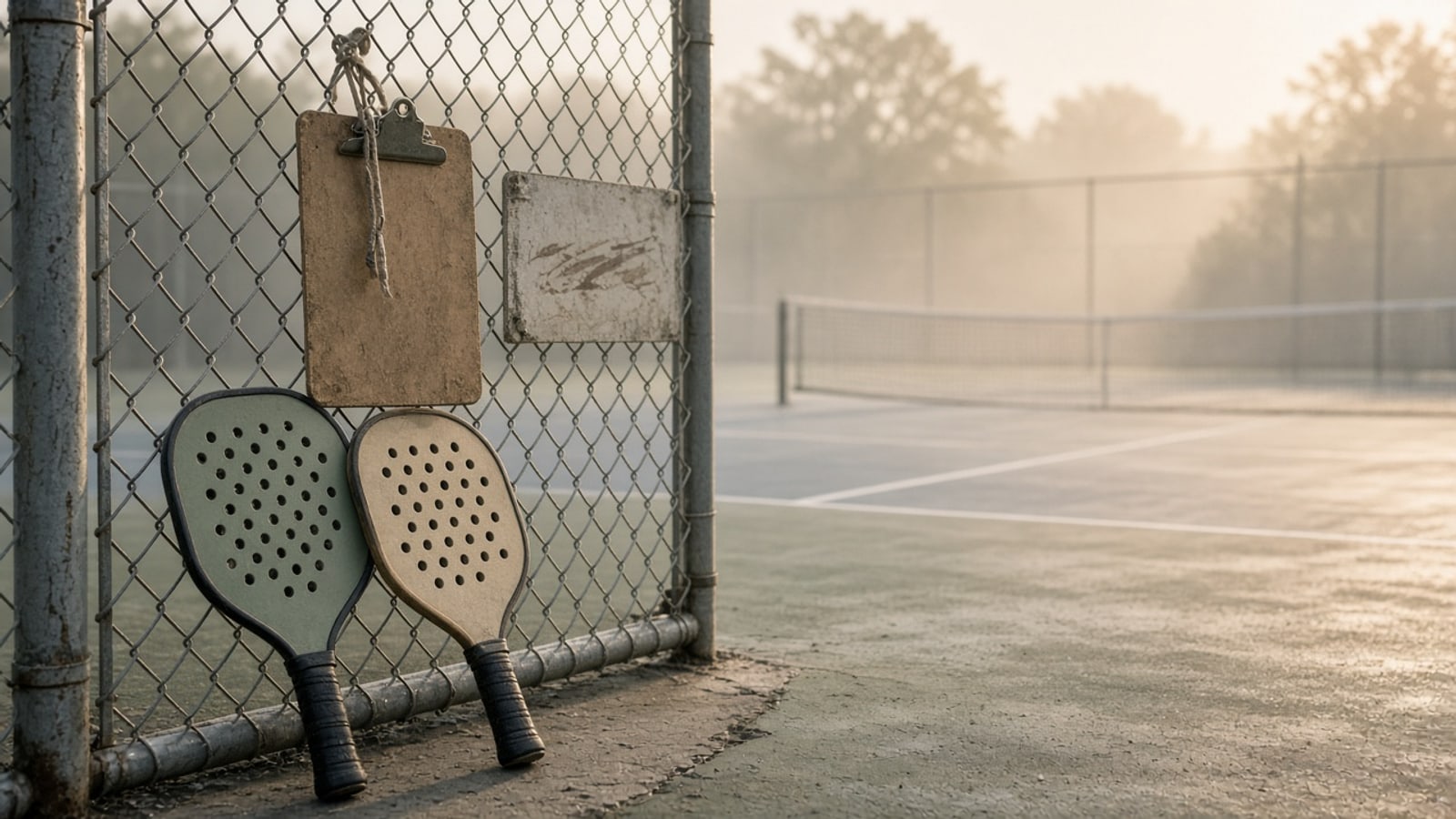
Saturday morning, twenty-four paddles on the bench, four courts, and a woman named Priya at the fence with her bag in both hands. She had signed in third, so she should have been playing by 7:50. It was 8:35 and she had played once. She said she did not mind waiting. That was the moment I knew the club had a problem, because the people who do not mind waiting are the people who quietly stop coming.
The foursome on court two had played six straight rounds together. They were four good players who had fallen into a rhythm, and every time a court opened, one of them called the winners stayed, and the rotation quietly bent around them.
I have run this club for seven years. The lesson I keep relearning is that a clique is usually a rotation problem before it is a personality problem. Fix the rotation and most of the cliques dissolve on their own. You do not have to have a confrontation. You have to make fairness visible.
The foursome that never breaks up
Nobody plans a clique. It grows out of small conveniences. Four players who are evenly matched and get along will keep choosing each other, because the games are better that way. The group that started with two courts and twelve people gets its rhythm, and the rhythm becomes a habit, and the habit becomes the thing new players walk into.
I do not blame the foursome. I blame a system that lets the same four players decide who is next by standing near the net. When the rotation lives in the heads of the people already playing, the people not playing have no way to see it. That is the whole issue. It is not warmth. It is visibility.
The paddle stack
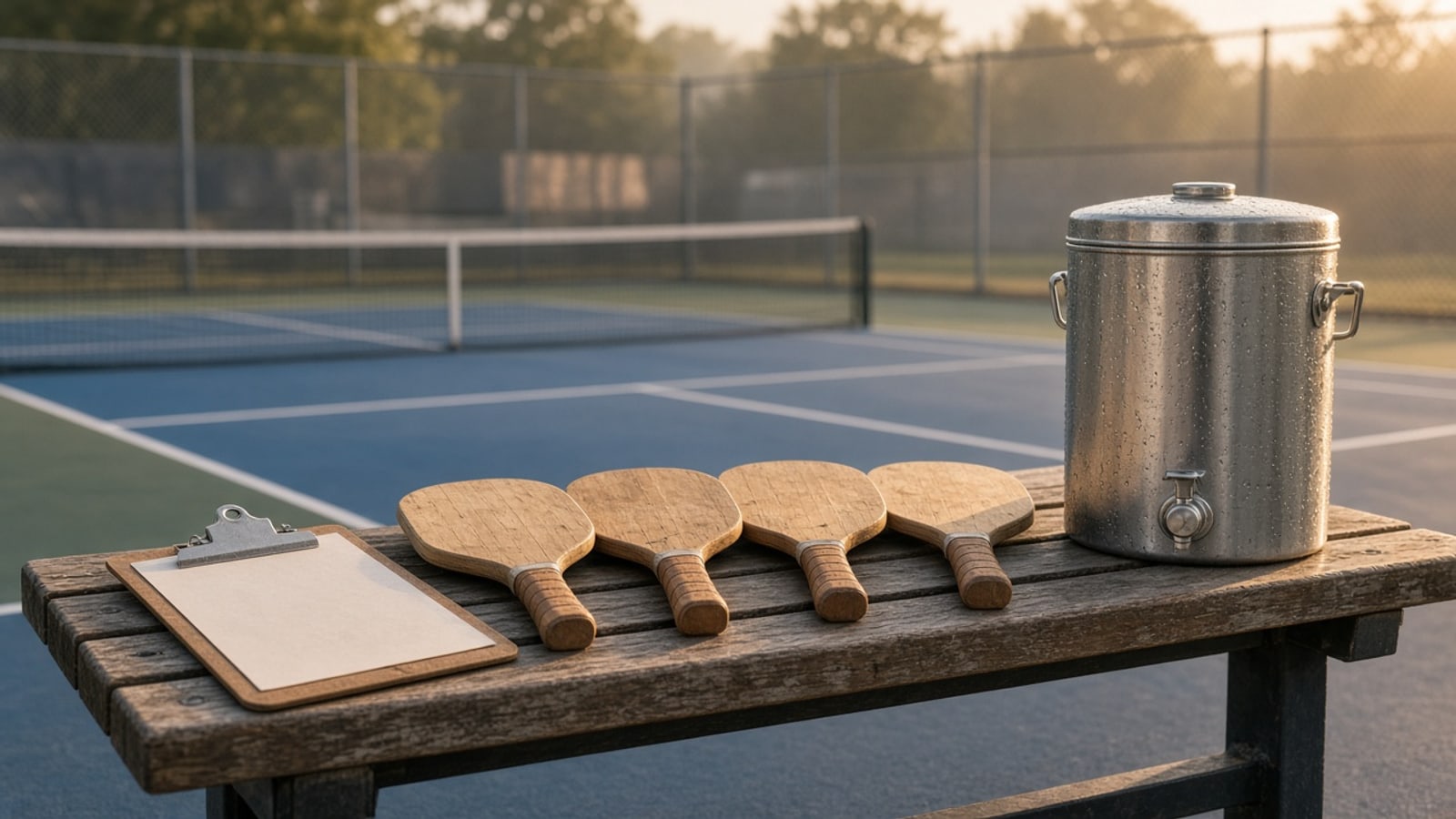
The paddle stack is the system now. It is a two-dollar solution to a social problem, and it works better than any speech I have given.
Every player puts their paddle in the rack when they arrive. Each round, I draw four paddles for each court at random, with one adjustment: I split the four strongest players across the four courts instead of letting them land together. That is the only rule, and I say it out loud every Saturday so nobody thinks I am hiding a preference.
The effect is immediate and a little funny. The regulars who always played together start getting different partners, and the games are still good. The strongest player on each court becomes a kind of anchor, which is a role most of them enjoy once it has a name. The newer players stop waiting for an invitation, because there is nothing to be invited to. The paddle stack does not know who is popular.
The one cost is that some players love the predictability of a regular foursome, and the stack takes that away. I understand the loss. I tell them the stack runs until 8:30, and after that the courts are open for however they want to organize themselves. Structure in the first half, freedom in the second. That compromise has kept more people than any rule I could enforce.
The bench rule
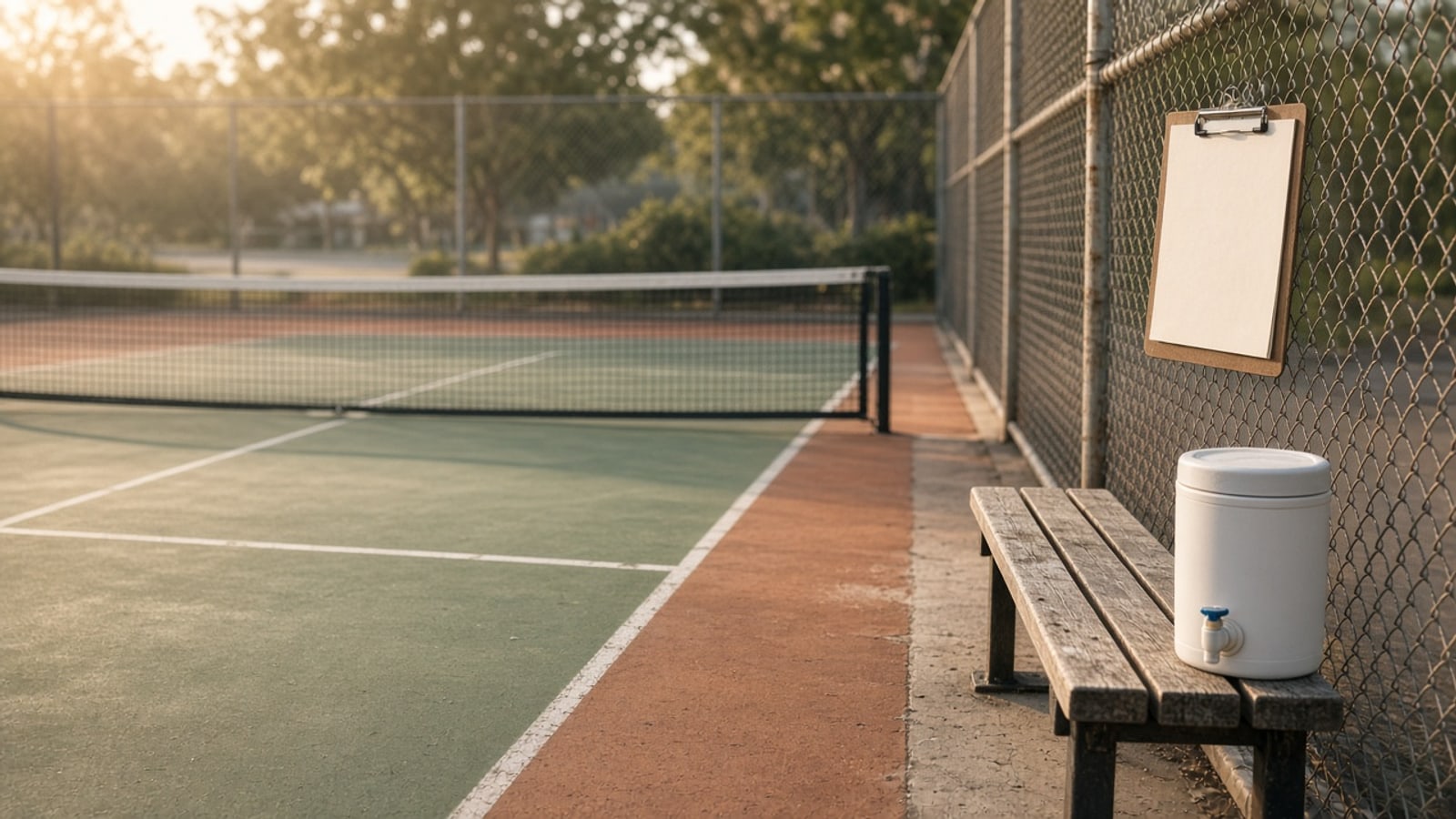
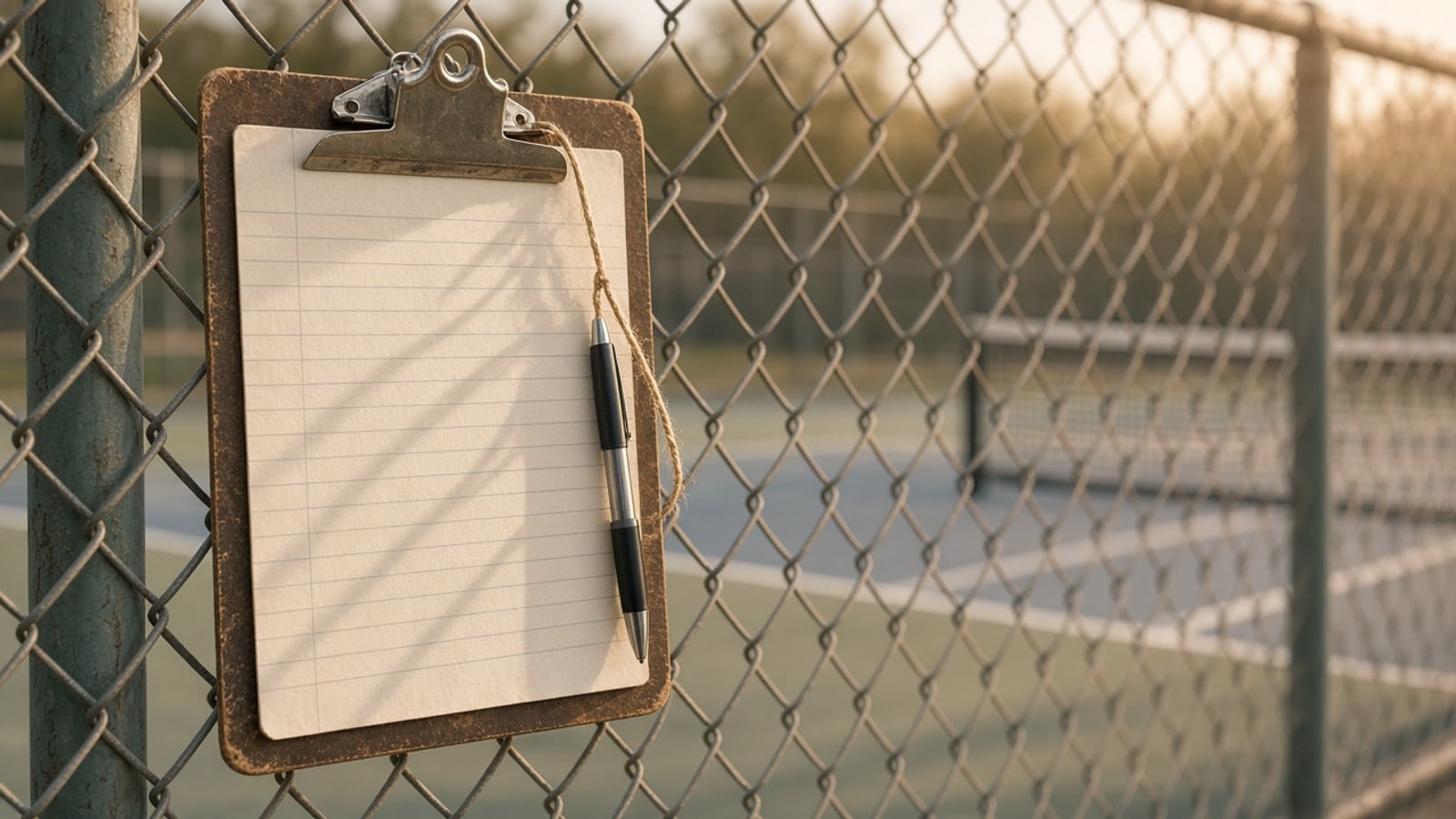
The second change was making waiting visible. There is a small whiteboard now, and every player's name goes in a column when they arrive and moves to the front when they sit out. If you are next, your name is at the top and everyone can see it.
Before the board, the order lived in my head and in the heads of whoever was closest to the net. I am not above favoritism, and I did not want to discover how much of it I had. The board does not have favorites. It also protects me from the accusation that I run an inside game, which is a thing people say about organizers in every club in the country.
The bench rule has one part that matters more than the board. If you sit out, you go to the front of the next round, and you keep your place if you take a phone call or walk to the fountain. That is it. The new player does not have to hover near the net and look eager. The new player just has to be on the board.
The quiet word
The paddle stack still needs a person to enforce it, and the enforcement happens away from the group.
When I saw the foursome holding court two, I did not say anything at the fence. I waited until the round ended, walked over to the tallest one, who I have known for four years, and said, "I need you to split for a round. The newer players are not getting games and you are the strongest group out here. I need you spread out."
He said, "Nobody is trying to hog it."
I said, "I know. But that is what it looks like from the fence."
He split for one round. The next Saturday he split without being asked. The week after, he was the one telling the new players which court was theirs. That is what usually happens when you ask plainly and give someone a job instead of an accusation. Cliques are often just groups that have not been given a role.
If the request had failed, I would have known something useful. A group that refuses to split after a fair request is not a clique problem anymore. It is a group that wants private court time in a public club, and that is a different conversation.
What a welcoming club looks like
The courts are the easy part. What makes a club survive is a handful of small, repeated decisions.
Somebody learns the new player's name. Somebody explains the rotation before the first game. Somebody writes the order where everyone can see it. Somebody pairs the nervous beginner with a patient regular, which I have written about in the new couple at 7:25. Somebody makes the strongest foursome split, and does it quietly.
None of that requires a better facility. It requires an organizer who is willing to be a little boring about fairness, and a group that will let the clipboard be in charge once in a while. Ray Whitfield, who has written about this better than I have, calls the sign-up sheet the real club constitution. He is not wrong.
Priya played three more rounds that Saturday and joined the Tuesday women's group the following week. She is now one of the regulars who helps stack the chairs. She has never mentioned the morning she waited.
The clubs that last are not the ones with the best players. They are the ones where a person standing at the fence with both hands on her bag can see, within five minutes, exactly when she will play next. That is the whole job, and the paddle stack does most of it.