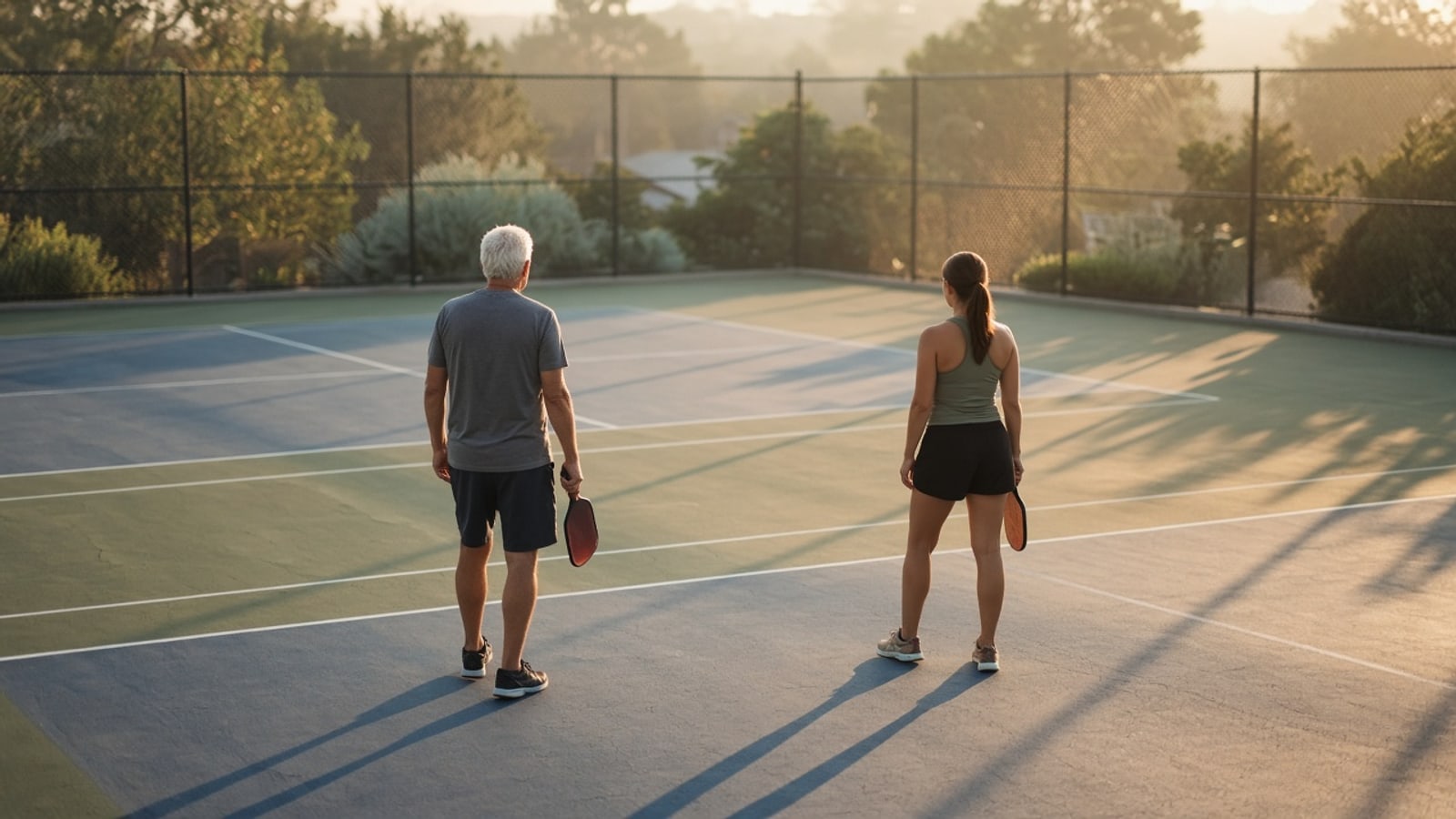
Tuesday at 7:22, before the 7:30 start at the Green Valley rec center, I watched a man two courts over sprint from the transition zone to the kitchen line while the ball was still climbing. He hit the volley off his back foot and it went into the net. The rule I keep is simple: do not cross the line until the ball has reached its highest point and started down toward your forehand, and even then only if your feet are already set.
I am a 3.0 to 3.5 player who plays right side, mostly doubles, and I have been working on this since Marlene put a paddle in my hand in 2021. She is the better athlete. I am the one who watches.
The line itself
The kitchen line at the rec center is painted yellow and has small chips from forty years of snowbirds. I arrive at 7:10 every Tuesday, Thursday, Saturday, and Sunday so I can stand near it before anyone else. The line is not a wall. It is a deadline. You can cross it whenever you like, but the moment you do, you owe the next shot a clean contact.
What I notice is that the transition zone, the patch of court from about the baseline to two steps inside the service line, is where most of my mistakes live. It is not the volley at the line. It is the step before the volley. My warm-up does not fix that step, not by itself. It only gets my left knee, the one with the 2019 scope, to stop arguing before I start asking questions.
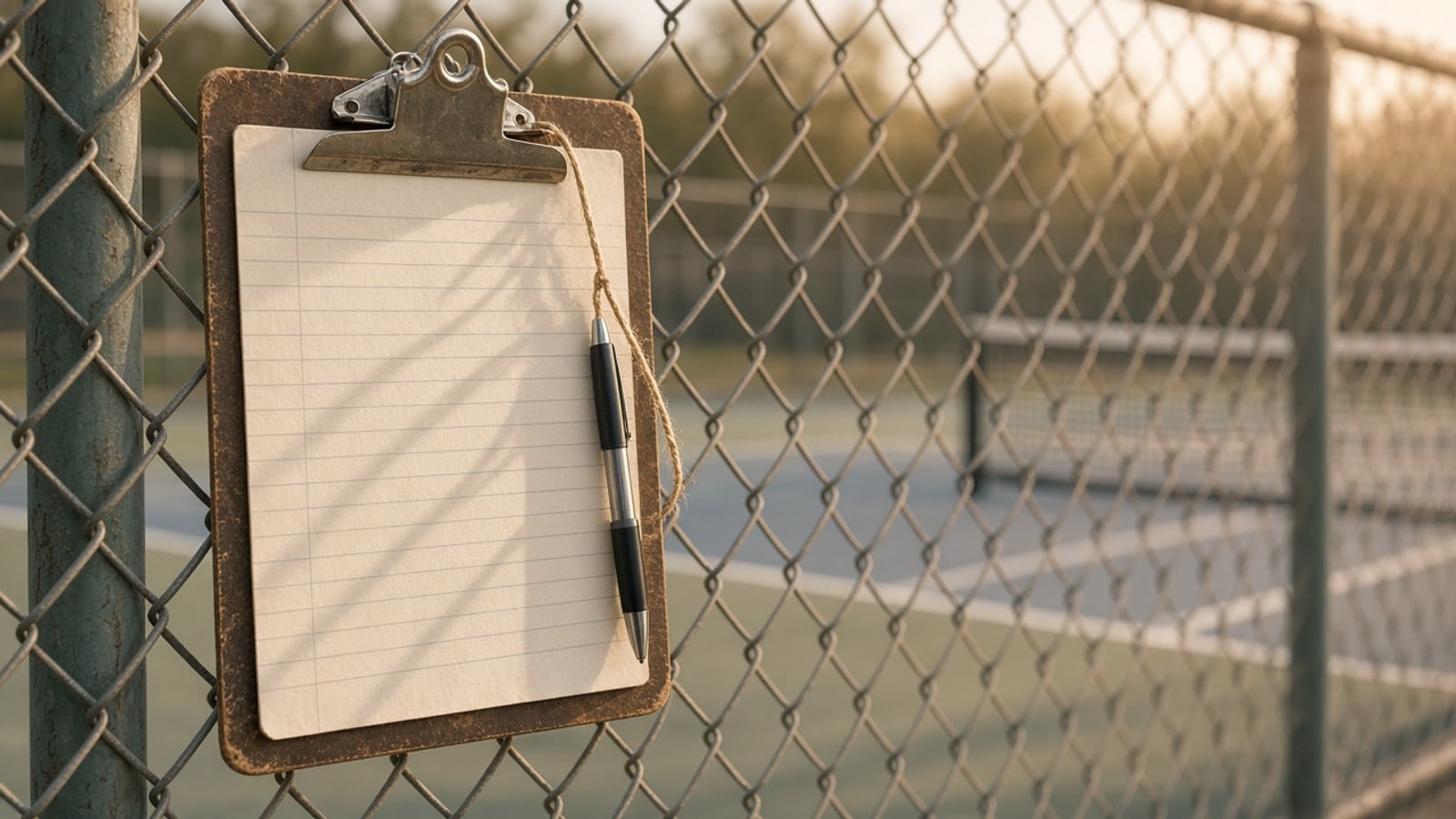
I read the sign-up sheet the same way I read a primary source. Third on the list means the 7:30 game actually starts at 7:10, because the early people have already decided which side faces the sun and which court has the least wind. The sign-up sheet is the real club constitution, and it tells me who will want the yellow line before me.
What the ball tells you
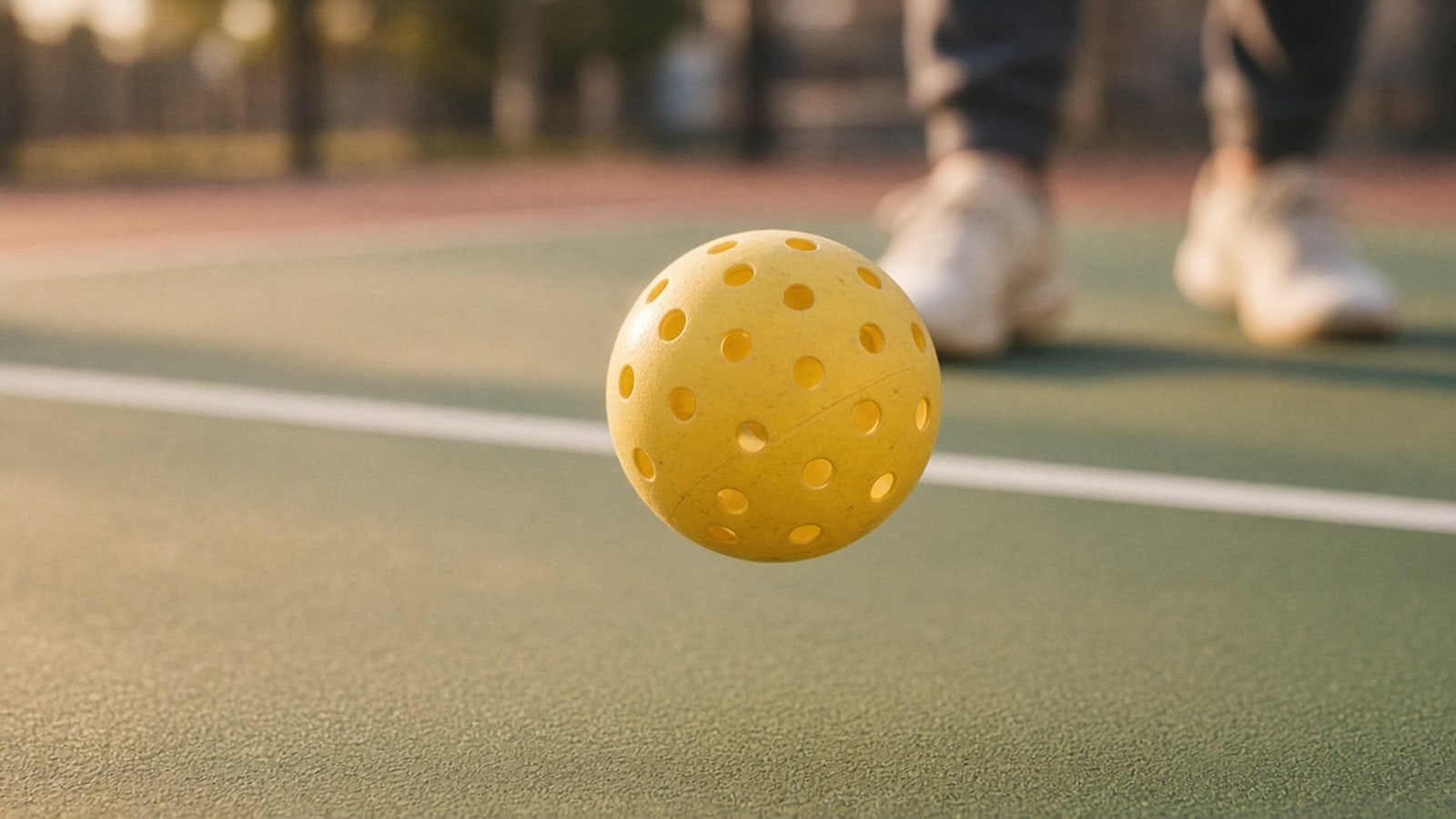
Before I move, I look at the ball, not the opponent. A ball that is still rising has not finished its business. It still has pace and a future. A ball that has peaked and is dropping has said what it will say, and if it is dropping into my forehand pocket around waist height, that is the only invitation I trust.
On Thursday last week, Marlene hit a third shot that stayed high and slow, the kind that says come forward. I took two steps, watched it drop, and hit a soft push to the open left seam. The point lasted seven more shots. That is the entire reward. Not a putaway. Just a chance to stay in the rally.
The wristband on my right arm is there because I sweat through grips, including the 4.3 inch grip on the paddle. When my hand is wet, I hold a half second longer. That half second is enough to turn a dropping ball into a rising ball again.
Some mornings the ball rises so fast that by the time I finish reading it, my partner has already moved and the point is over. I have learned to let those points go. They are not lost in the transition zone. They are lost in the half second before I started watching.
When I held and why
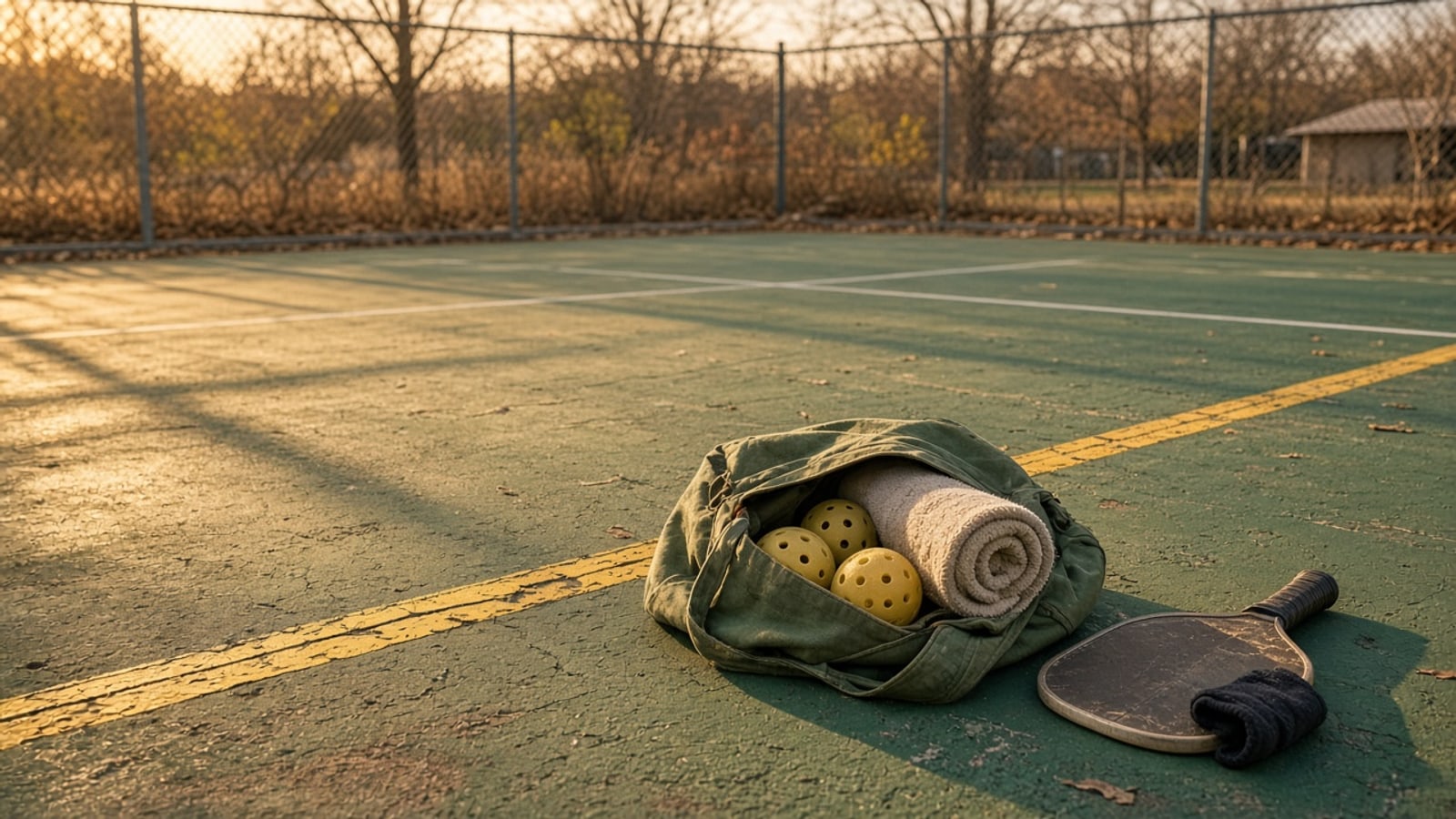
Saturday morning, the court dog was sitting at the fence with a tennis ball, and I had three balls in my green canvas bag, which also holds a rolled towel and a pocket of treats. I do not feed him before a game. I held my position at the baseline three times in one rally, twice because the ball was behind me and once because my partner, a man who signs up third on the sheet, had moved forward and left the whole right side open.
Holding is not passive. It is deciding that the next ball is not yours to advance on. If the ball is rising to my backhand, I let it come. If my partner is ahead of me, I stay one step behind the service line so I can cover the lob. The rule is not never move. It is move when the ball and the court agree.
The morning after three hours of pickleball, my left knee has a longer opinion than my right hip. That is the real reason I hold. Not fear. Arithmetic. Every step I save on Tuesday is a step I can spend on Sunday, and Sunday is when the regular group plays the long games with no waiting list.
The decision table for Tuesday
I do not carry a notebook, but I do talk to myself between points. The table below is what I say, compressed. It is not coaching. It is what I noticed, written like a history teacher marking a timeline.
| What the ball is doing | What I check before moving | The rule that follows |
|---|---|---|
| Rising off the opponent's paddle | My feet, my grip, my balance | Hold. The ball still has future. |
| Peaked and dropping to my forehand waist | My partner's position, my left knee's answer | Move two steps, set, then contact. |
| Rising to my backhand side | The angle, my wristband, who is behind me | Stay back, let it fall or play it low. |
| Dropping but wide to my backhand | Whether Marlene has come forward | Jab step only, no full forward run. |
| High and slow, floating to the middle | The court dog, who is not in play | Step to the line, no swing, open face. |
The table has no percentages. It has no brands. It has only the paddle, my knee, and a Tuesday morning in November when the air is cold enough to keep the balls slow and the decisions slower.
The cost of early
I have watched the new couple who arrive at 7:25, the two who scan the court the way I once scanned a seating chart. They move early. They cross the line on rising balls, hit out, and then they laugh it off. I do not laugh. I just note it. The first forty minutes are a small constitution, and the transition zone is where most of it gets signed.
Early movement does not just cost one point. It costs the next rally, because the player who hit into the net spends the whole walk back explaining it. I know. I used to explain. Now I just take the side gate, loosen the wristband, and look at the line again.
My goal is not a number. I want to be on a court in November eleven years from now, still saying 'up' on an overhead.